Customer
Strategic research to shape future direction
A discovery programme with over 700 people that helped Cuvva decide which new mobility ideas to back, and which to let go.
In brief
Cuvva’s new mobility mission opened up big ideas, but we didn’t know how much customers wanted them. I led a discovery programme, from a product vision and business case through YouGov surveys, interviews and false door tests with over 700 people.
OutcomeWe dropped one idea early and took two forward on evidence from over 700 people. The work eventually led to car clubs, as part of the search for product–market fit, and the approach became a repeatable research framework.
Context
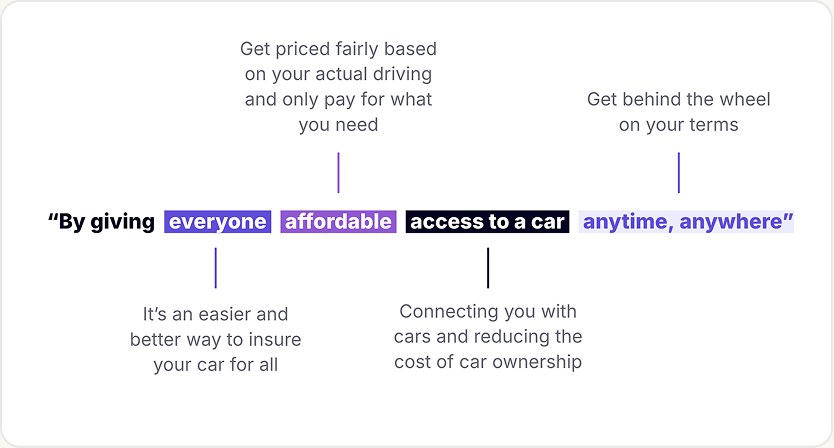
In my first few months at Cuvva, I led a project with Leadership and Brand to redefine our mission from “Radically better insurance” to “Giving everyone affordable access to a car, anytime, anywhere”. It reflected a strategic shift to focus on mobility alongside insurance.
The new mission opened up a few big ideas to explore. We had a sense of their viability, but little insight into how much existing and potential customers wanted them. To close that gap, I led a discovery project to uncover customer needs and their appetite for the propositions.

The challenge
- Cuvva, including the PM on this initiative, had no experience of generative research and wasn’t sure where to start.
- Our research team wasn’t familiar with this type of research and was already busy with other projects.
- The research budget was limited by the size of the organisation.
- There was no process for recruiting Cuvva customers for interviews, which led to poor attendance and wasted time.
- Time was tight. We needed a quick turnaround so teams could focus on the biggest opportunities.
What I did
1Set a vision
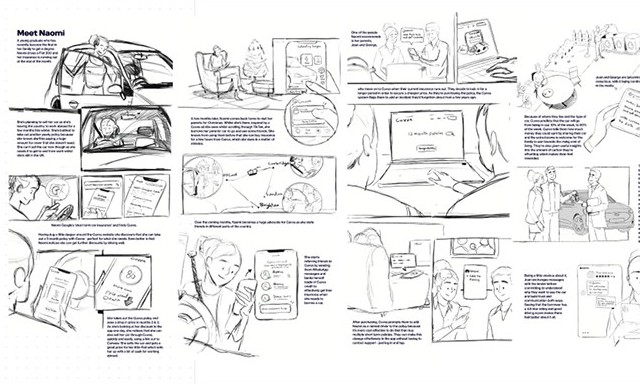
I drafted a product vision script to show a future state for Cuvva and align the team and stakeholders on our goals. I then worked with an illustrator to turn it into a storyboard.

2Map and prioritise
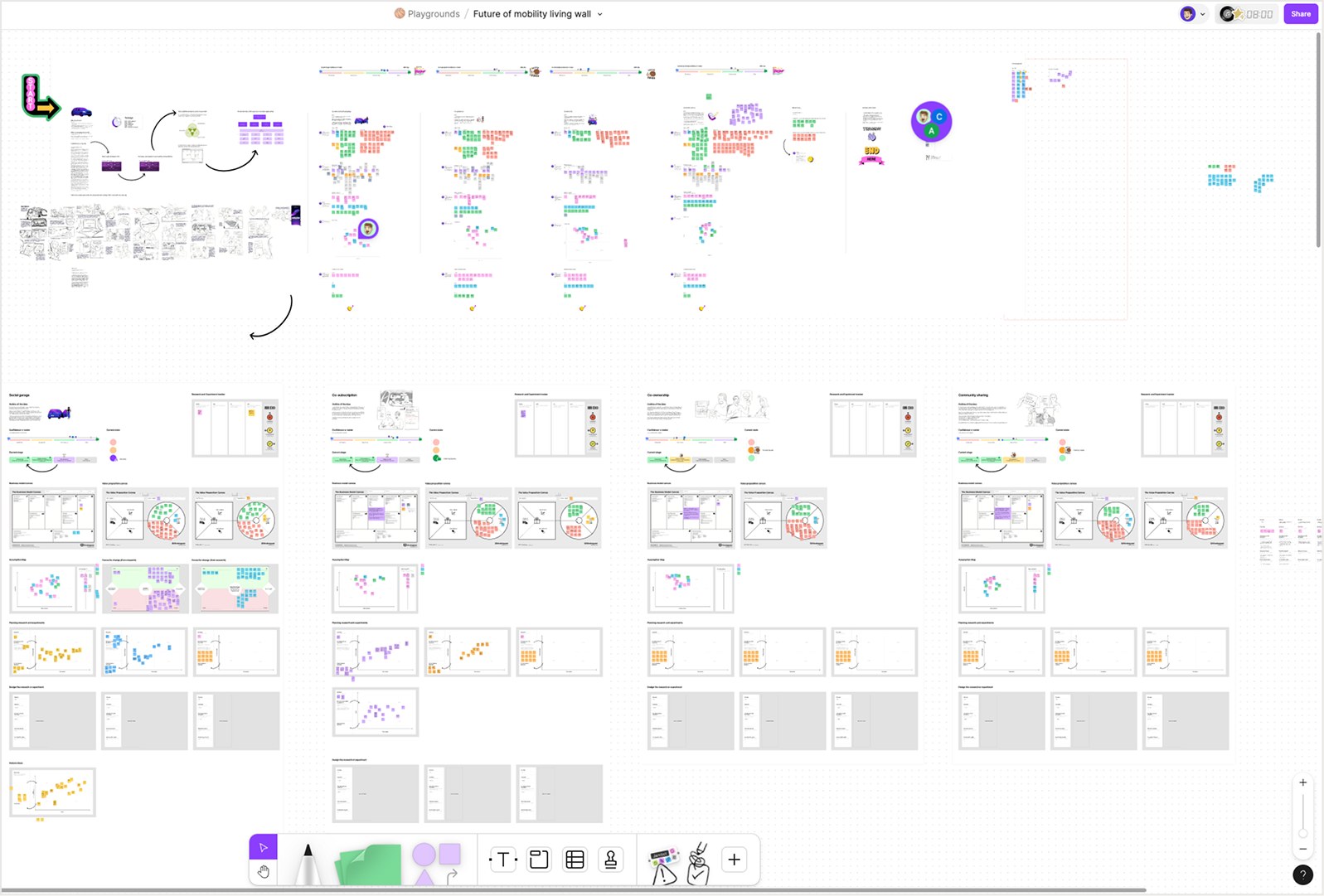
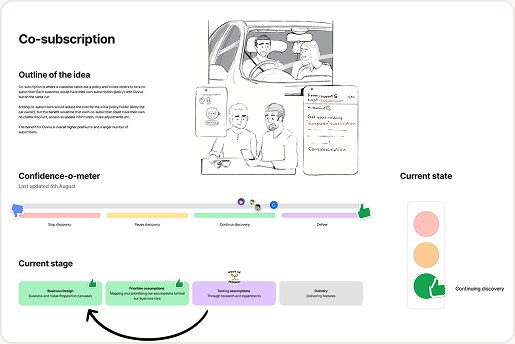
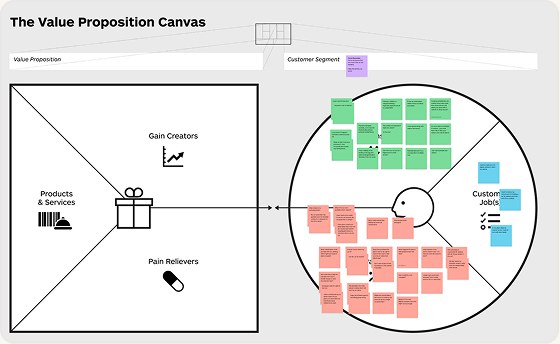
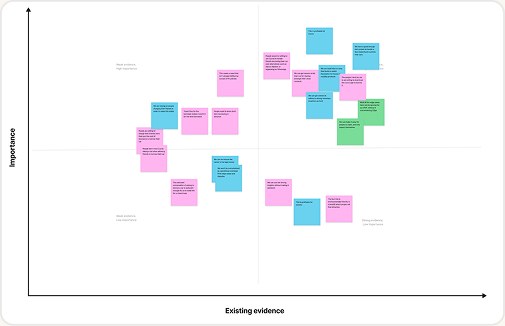
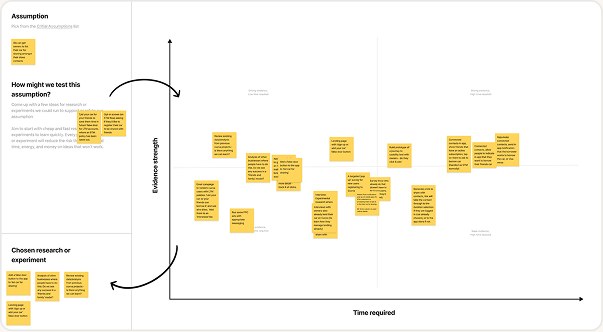
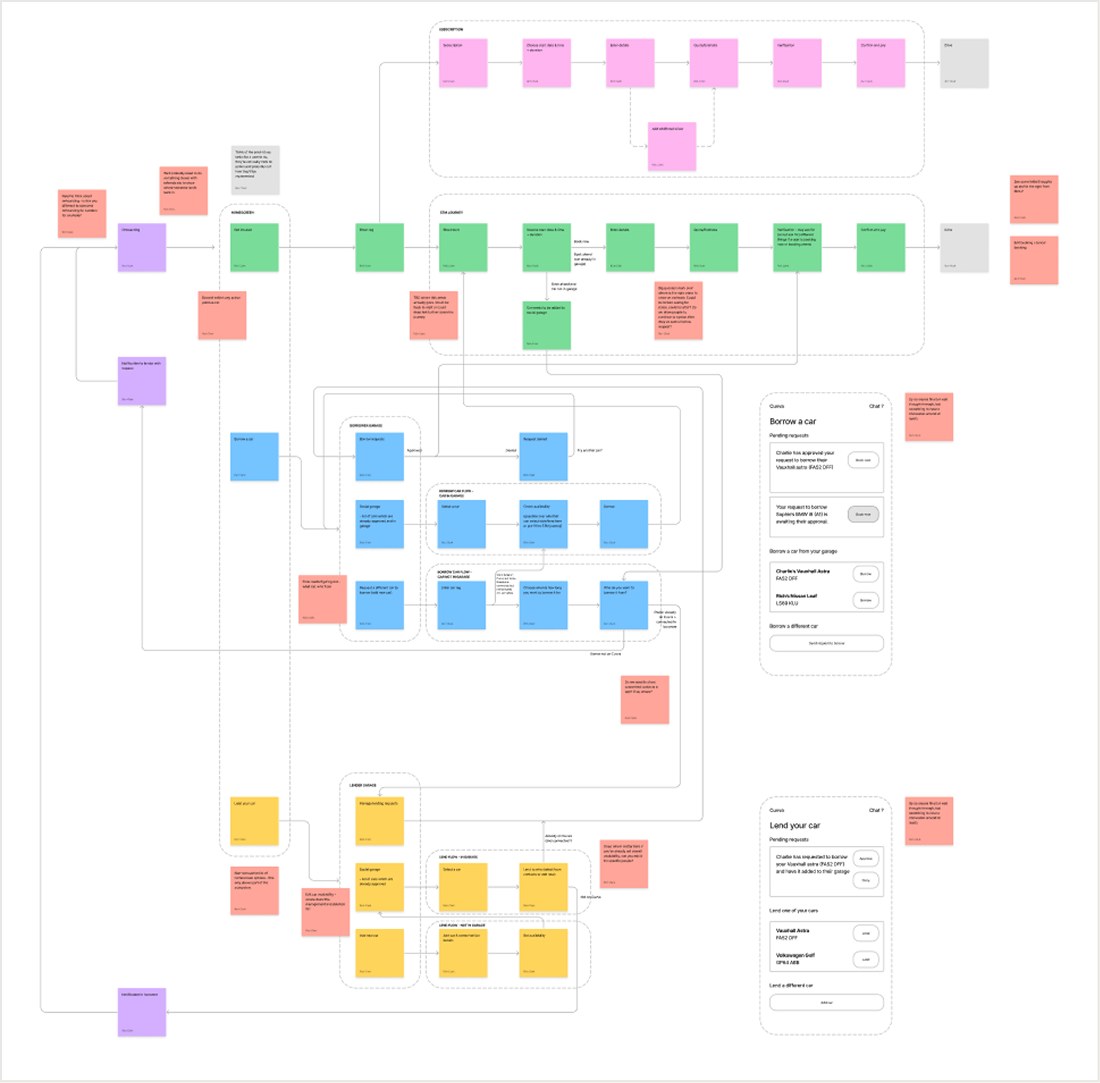
I mapped objectives and ran workshops to capture assumptions and brainstorm quick ways to test them. A “living wall” tracked the discovery work and assigned tasks for competitor research, market analysis, value-versus-effort prioritisation and feasibility studies.

3Make the case
I wrote a business case to secure more budget for tools and to bring in a freelance researcher for qualitative and quantitative analysis. As part of this, I set up a structured process for recruiting and researching with Cuvva customers.
His ability to conduct research quickly and efficiently allowed us to implement insights faster, resulting in measurable improvements to our key metrics.
4Research
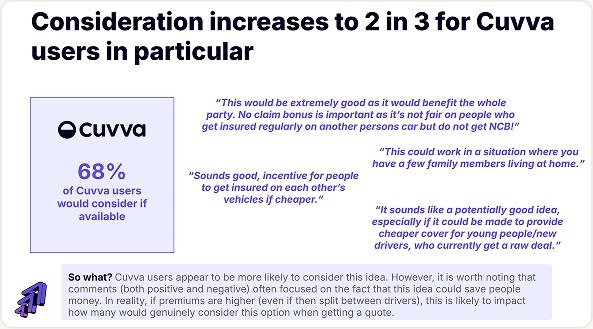
I led a large quantitative survey through YouGov for initial insight, followed by qualitative interviews. I facilitated some sessions, took notes and summarised findings with the freelancer, then presented the insights to the whole company.
5Test real appetite
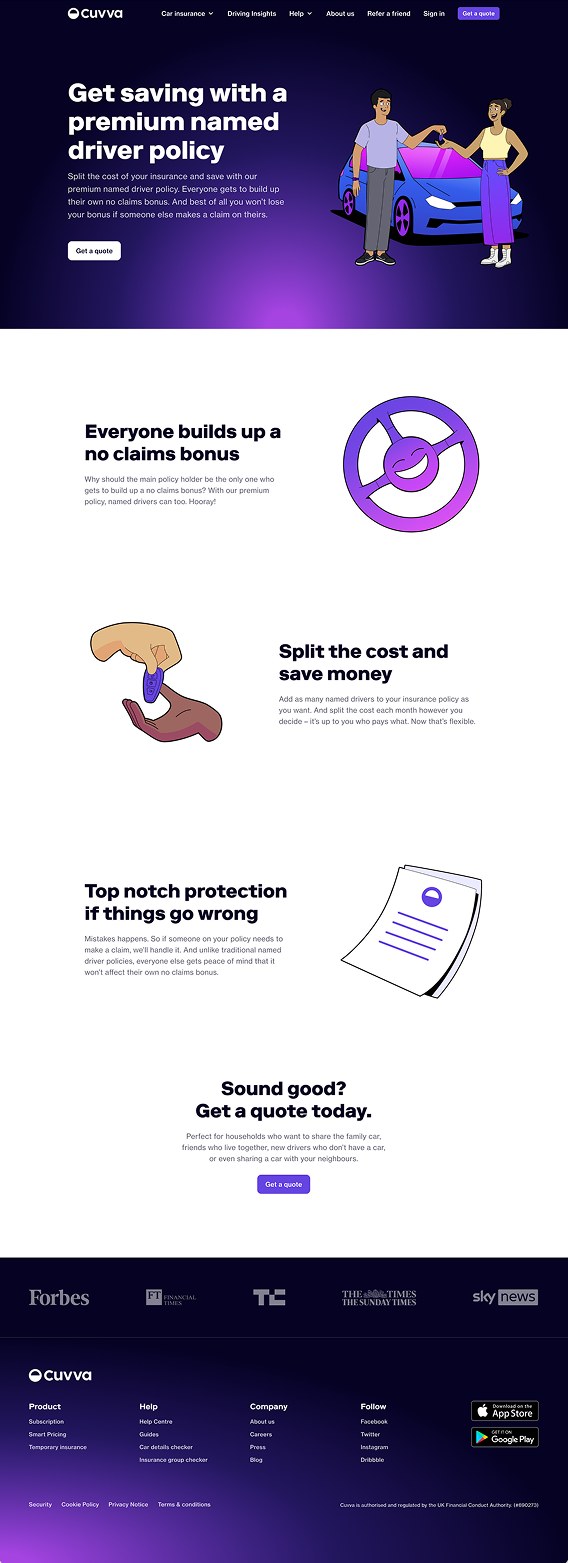
I worked with Marketing to test propositions on Facebook and other channels. We also built false door tests on the web and in the app to capture intent.


Results
Clear decisions backed by evidence: one idea dropped, two taken forward, and a repeatable way of doing discovery.
- Found that one opportunity wasn’t worth pursuing, freeing us to focus on other projects.
- Took two opportunities forward for more discovery and development.
- The discovery work eventually led to car clubs, as part of the search for product–market fit.
- Gained insight from over 700 people.
- The discovery approach was adopted on other projects, improving how we research.
- The team learned new methods, and we created a repeatable generative research framework.
- Collaboration across departments improved, along with a shared understanding of customer needs.
Reflections
Looking back, we could have picked up the pace. We spent too long prioritising assumptions and working out how to test them instead of diving in. In hindsight, I was probably a bit too collaborative and could have been more directive at times.
We could also have let go of one idea sooner, when the early signs weren’t promising. It makes me wonder whether other methods would have got us to the same conclusions more efficiently.